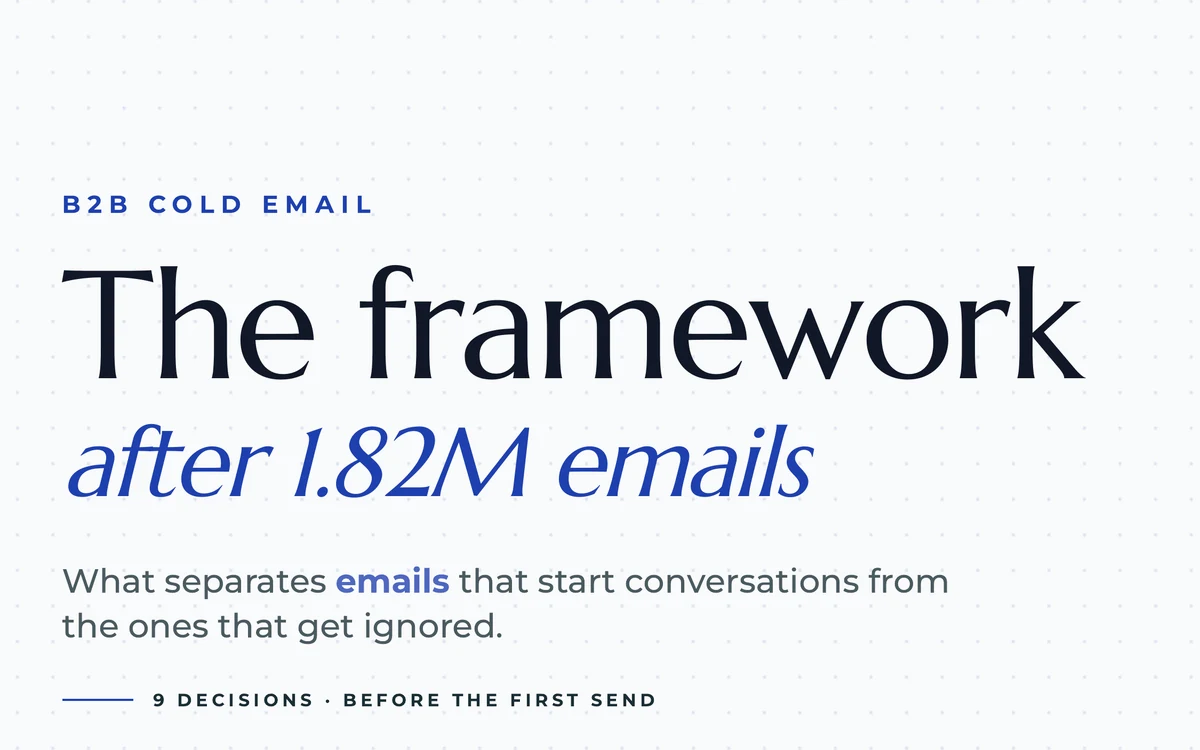
How we build cold email systems from scratch:
(What we learned after 1.82M sends.)
1. Strategic clarity.
Define who you're targeting, what pain you solve, and what makes it compelling. Test angles until you find the one that lands.
2. Recipient data.
Without enriched data, the message reads generic. Signals are gathered, not generated from templates: headline, department, news, funding announcements.
3. Relevance.
Personalizing with {{first_name}} and a detail from their LinkedIn won't save a message that doesn't speak to a real problem. The segment's pain weighs more than the recipient's detail.
4. Fundamentals.
ICP, offer, and message cover 90% of the result. Going deeper on the three is worth more than adding new tactics.
5. Small lists.
Micro-lists of 100 to 500 hyper-qualified contacts beat 10,000 generic ones.
They let you write specific copy per segment and get real feedback to iterate cleanly.
6. Value-first email.
Don't lead with the ask ("15 minutes on Thursday?"). Lead with value so the recipient wants to know more.
7. Follow-up.
The follow-up delivers something different from the cold email: a reminder, value, a new angle, a close. Four types we rotate by client, sector, and stage.
8. Long term.
Building a stable pipeline weighs more than winning leads today.
No shortcuts. Design a system on a solid base: good segmentation, a relevant message, and strong deliverability.
9. Deliverability.
None of the above matters if you land in spam. Multiple domains, several mailboxes per domain, 15-20 emails a day per mailbox as the ceiling, technical setup aligned (SPF, DKIM, DMARC), 14 to 20 day warm-up.
Bonus: Active presence on LinkedIn.
When a decision-maker gets a cold email, the first thing they do is look up the sender on LinkedIn. An active profile, with a point of view on the space and visible proof, gives them more reasons to reply.
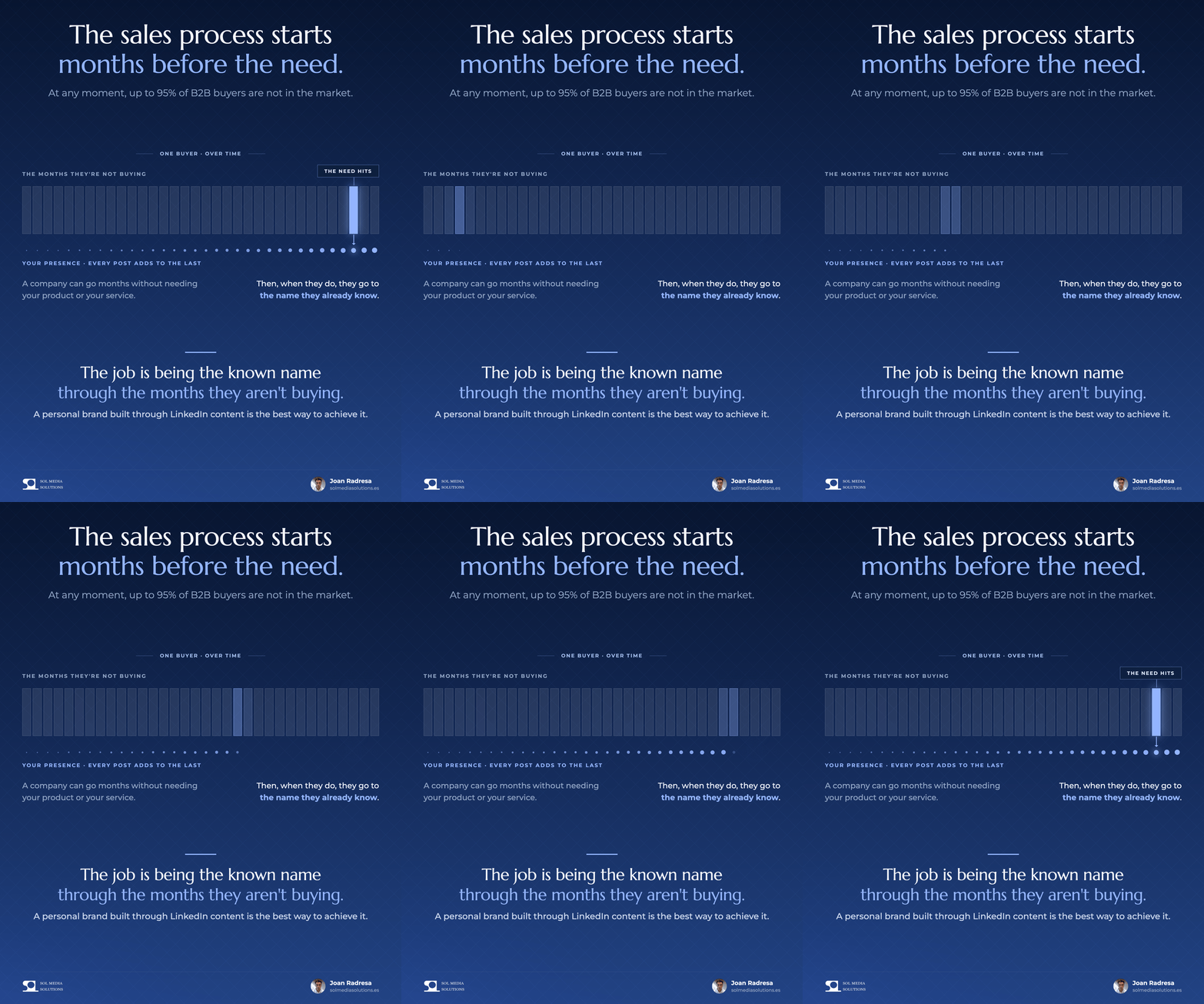
Ads rent your presence, outreach spends it chasing the moment. Content is the one you end up owning, and why we build LinkedIn into every system
Read →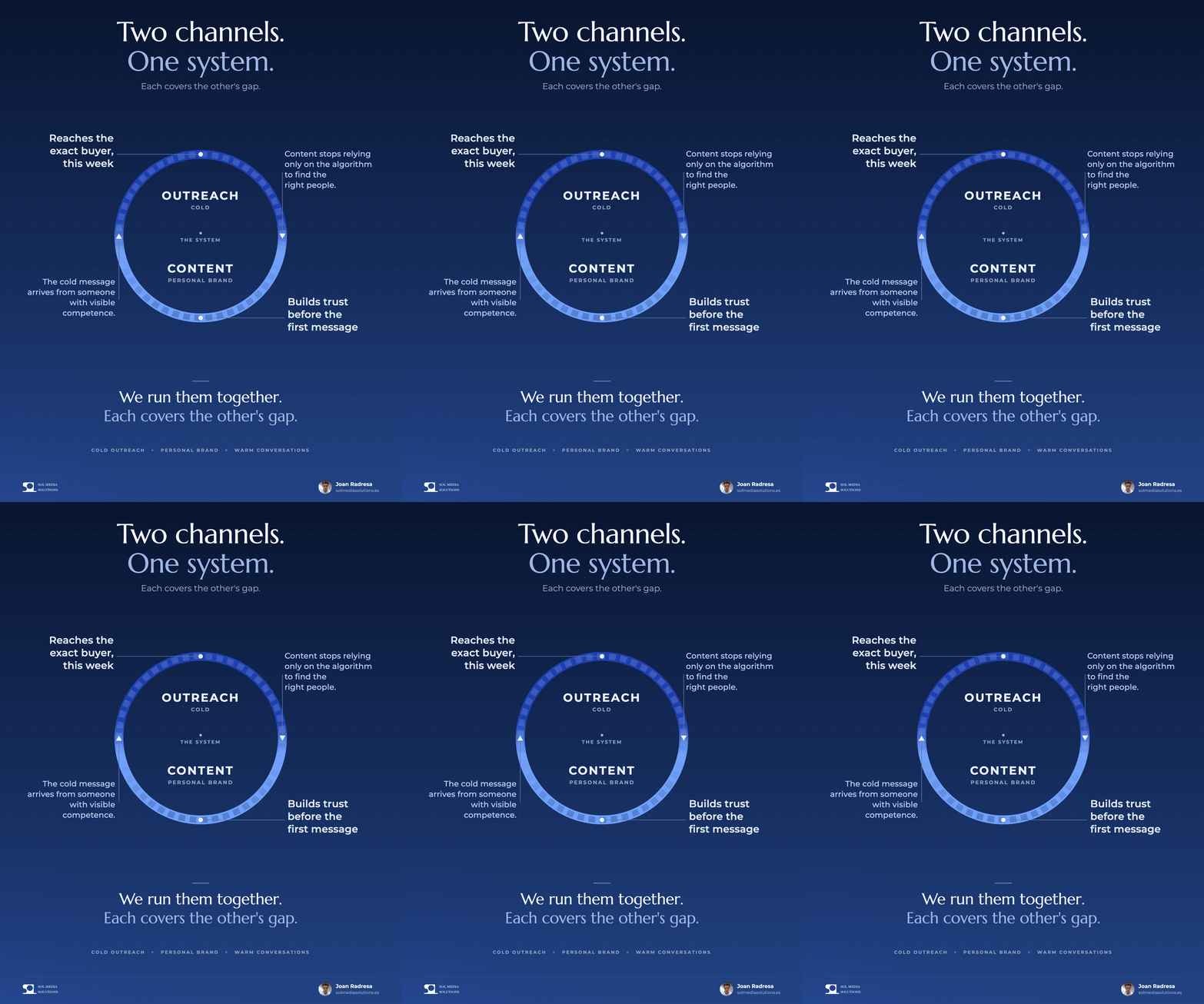
Outreach starts from zero every time; content is slow and can't pick the audience. Run together, each channel covers the other's weakness
Read →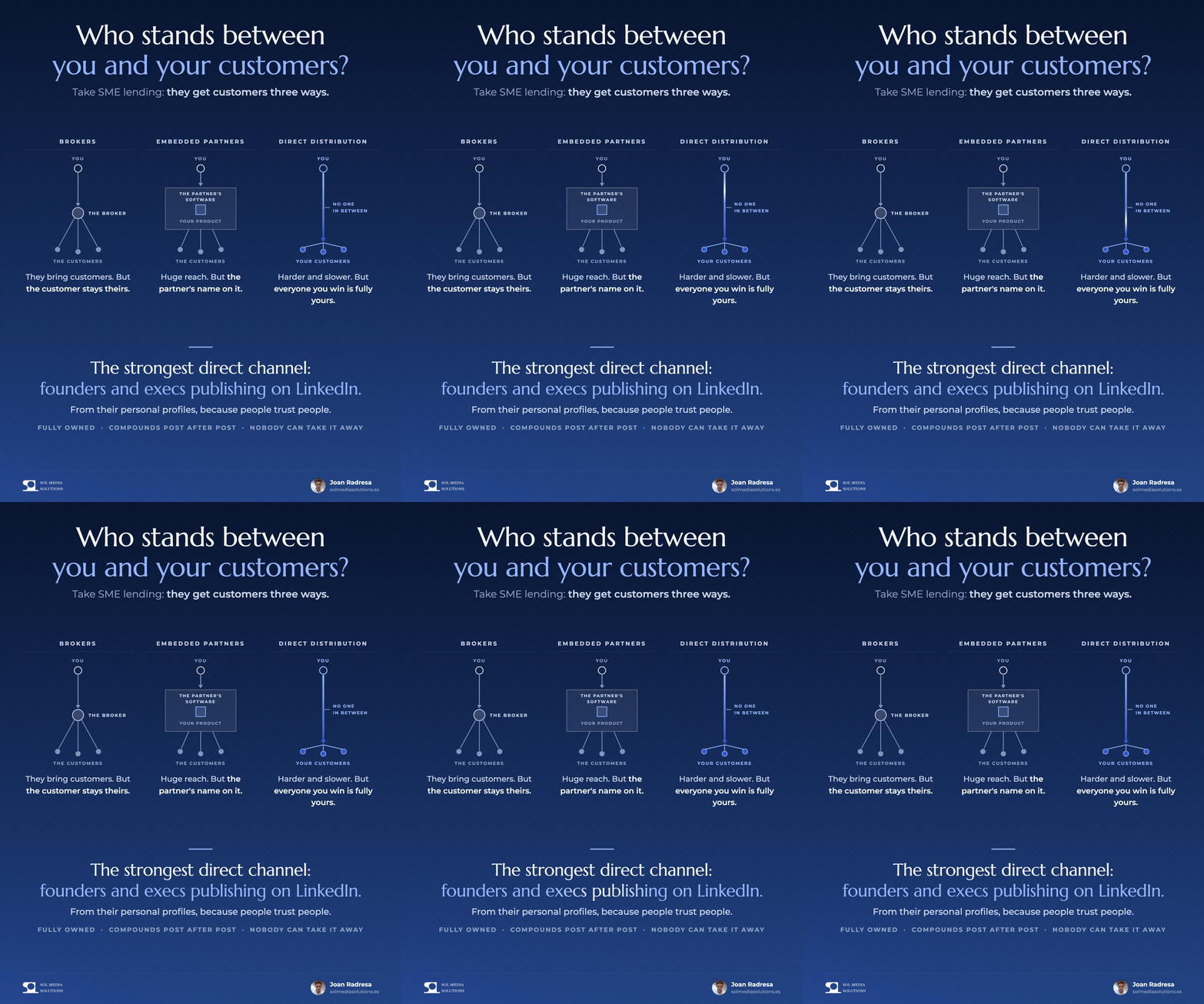
Brokers keep the customer. Embedded partners set the pace. The case for a direct channel that compounds and nobody can take away
Read →This is how we think and execute. If you want to see how it would apply to your case, let's talk.